Cloud Atlas, Epic, 2012
Plot (taken from IMDB): An exploration of how the actions of individual lives impact one another in the past, present and future, as one soul is shaped from a killer into a hero, and an act of kindness ripples across centuries to inspire a revolution.
Thoughts: The simplest way to describe this story is a modern day epic. The scale of Cloud Atlas is really what makes this film successful. It follows the chain reaction of certain events through 5 centuries and how they all coincide with one another to create change in the world.
The idea of the nonexistence of “race” (which is true) also makes its way into Atlas. The film forces you to see that a person’s looks do not define or dilute their character. Not only were the actors made up as different ethnicities, but they also bent the lines of gender/ sex and age.
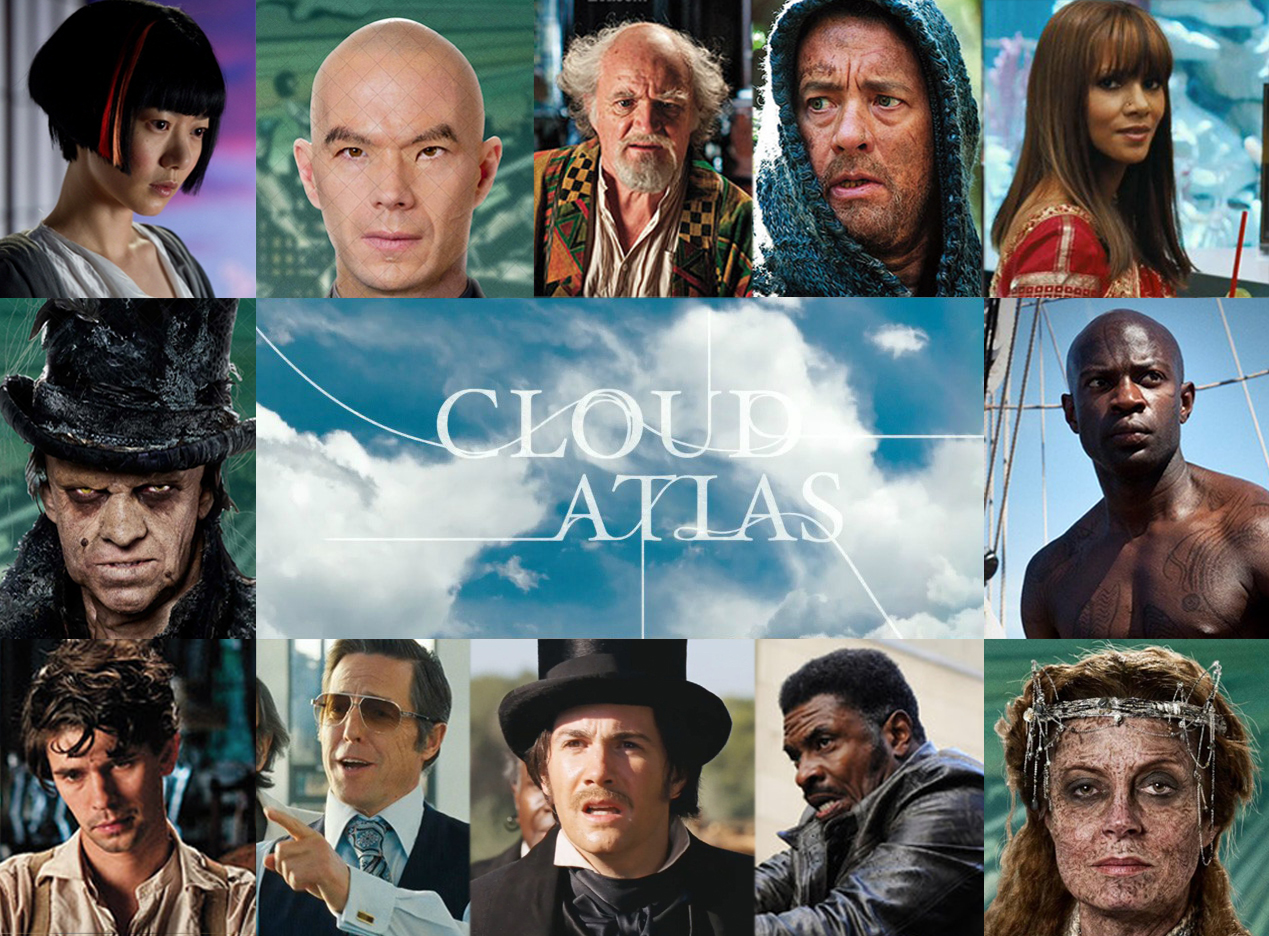 |
| The cast of Cloud Atlas |
It is difficult to create a broadstroke review that will succintly define the movie since it is a series of six unique stories so I have a set of mini-reviews for each time period:
(In chronogolical order)
Plot 1: 1800s- The story of friendship between a son-in-law of a powerful slave trader in America and a slave who has stowed away on a ship.
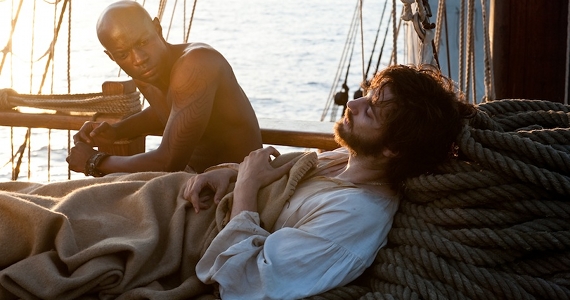
Although, this has been done several times before (and a couple of times were better) I’d say this tale of friendship was a good balance in a film that featured so much eros. Sturgess and Gyasi really played off of one another well and Hanks’ character added the strong human characteristic of greed.
The makeup was tactfully done, I really got a sense of the dread of the slaves but not without compromising their looks. I loved the mix between the old and new worlds. This was probably the most predictable story line, it was solid but nothing too fantastic.
Plot 2: 1930s- A frustrated and degenerate English composer takes solace in the home and under the guidance of one of the greatest composers of that era.
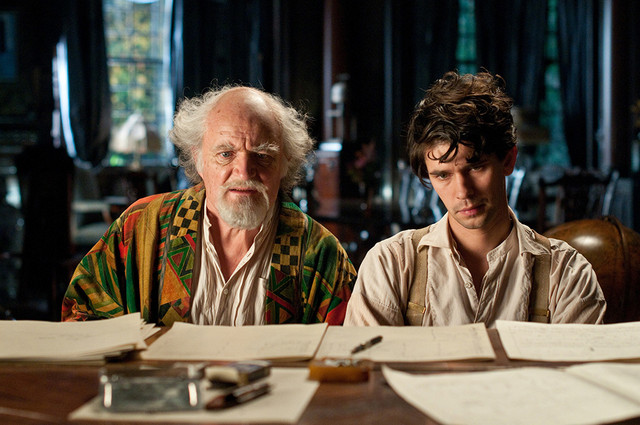
This was probably the purest love story in the film. Whishaw is in love with many things but can’t figure out what he needs to satisfy his need to write music. His life becomes greatly influenced by a journal from the past.
The one thing that really threw this story off for me was Halle Berry’s makeup. She was supposed to be a Jewish woman, but it just fell flat on all fronts and was unbelievable. This story dragged the most, but it really kept you engaged with the hook at the beginning of the movie.
Plot 3: 1970s- A woman attempts to uncover the truth about a nuclear reactor plant that is being built in San Fransisco.
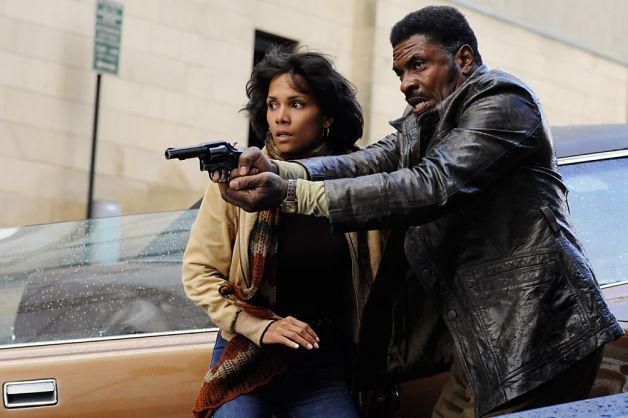
Berry and most of this cast are what fails this story. It was overly dramatic and a bit too convenient at parts. The set design, costume, and makeup are what set this story apart from the rest. It gave a certain cohesiveness to the film and mirrored the tone of the film best of all.
Plot 4: 2012- An elderly book publisher finds excitement in what has been an ordinary and dull life thus far.
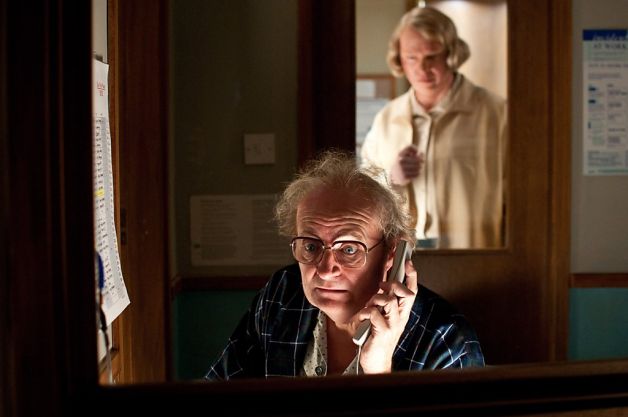
The only comedy of the six, this segment really spoke to the individual who never grows up. The adventures and chain of events that lead to different directions. I really laughed out loud at some scenes. The ideas in this story ranged from historical opression to remembering our seniors.
Jim Broadbent’s performance was energetic and fun. It helped break up the tone of the movie while still maintaining the film’s message.
Plot 5: 22nd Century- An android in Neo Seoul, Korea learns the truth about the dark depths humanity can go and tries to become a symbol of hope for the desolate land.
This story seemed like a match-up between Blade Runner, The Fifth Element, The Matrix, and Tron. It was by far the most complete of all of the stories. Doona Bae’s potrayal as innocent Sonmi-451 really allowed the audience to identify with someone who was not caught in the system of right and wrong.
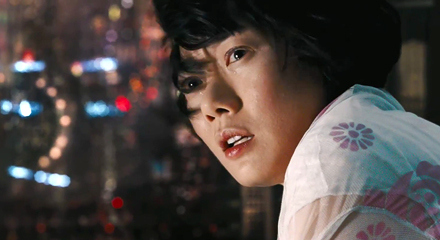
The love story in this plot also allows it to develop at a faster rate and the twist that occur are horrifying. The visual representation of Neo Seoul take this story to the next level of film. Sturgess is also strong in his role and really creates a depth to the character that makes him more complete.
Nearly all of the actors involved in this plot wore makeup that was made to have them resemble the people of East/ Southeast Asia. I could see what they were pulling from, but the makeup was not 100% accurate. But, it allowed me to see beyond what that person looked like and better focus on the story.
Plot 6: Post-Apocalyptic (undetermined time)- A man who has survived by not taking risks is forced to either continue being cowardly or face his greatest fears in order to save his village in a post-apocalyptic.
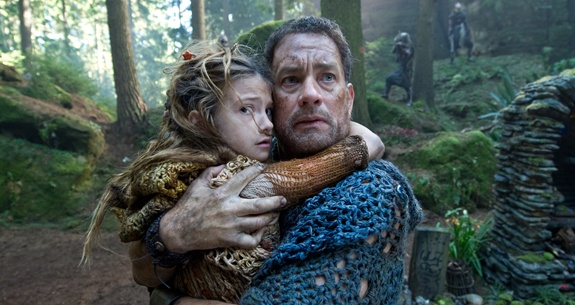
This was one of the weaker plots, and although I enjoyed the makeup (which reminded me of Valhalla Rising and Apocalypto) and the ideas that developed the background of the film, there just wasn’t enough to really keep me interested.
The off accents and changing words such as “truth” to “true true” made me feel as if I were eavesdropping on someone having a conversation with an infant. Along that same line, Halle Berry should never do accents (see also: the first X-Men film). I did enjoy Hugo Weaving’s performance, though his makeup looked like it was done by an amateur at times.
Though I listed the plots in chronological order, this is far from how the film was cut together. At first glance it tends to jump at random times and intervals, but a look closer reveals that the stories were connected by themes and stages of action.
Alexander Berner deserves an Academy Award for his outstanding editing. He guided a potential ship wreck into a seamless and coherent film, providing some of the best editing I’ve seen since Memento. Although Cloud Atlas was nearly 3 hours long, the pacing was done so effectively that the film wouldn’t have seemed right if it were any shorter (if you’re the type that looks at the time during a movie, then you’ll probably loathe this long journey).
 The Film Chronicles
Interesting. I was on the fence before but I may have to check it out.
LikeLike
I'll probably have to wait for the Blu-Ray but I'll probably see it. It sounds like an interesting movie. I heard the book was actually written in a way such that the author called it \”impossible\” to make a movie out of. Nice to hear that the creatives involved were able to overcome the hurdles
LikeLike
If you haven't checked it out by next month, we can catch it when I get home for the holidays. It's worth seeing more than once.
LikeLike
I know you're TV is the bomb but you're not going to want to miss out catching this in DLP on the big screen.And yeah, they did a great job of making the story make some sort of sense (although it was hard to understand what people were saying at times).
LikeLike
Nice review!!!
LikeLike